
If you’re a manufacturer, you might find yourself grappling with the unpredictable nature of the market. Over-predict demand, and you risk overproducing, leading to excess inventory and wasted resources. Underpredict, and you risk missing sales opportunities and frustrating would-be customers.
Every decision can feel like a gamble, and the lack of visibility into future market conditions can force you into a reactive rather than proactive stance.
Skillful forecasting can change all of that.
In this guide, we’ll walk you through the ins and outs of forecasting, including showing you where traditional forecasting methods can fall short, and how the right tools and partnerships can turn a hazy outlook into a crystal-clear picture.
Ready to dive in? Let’s get started.

Understanding Forecasting in Manufacturing
Before we dive deeper, let’s review the basics: Forecasting is the art and science of predicting future events based on historical data and analysis.
In the manufacturing sector, accurate forecasting is crucial for several reasons:

Accurate forecasting gives you the visibility you need to make informed decisions. By making better decisions, you can ensure your production levels meet market demand without over- or underproducing, leading to cost savings and higher customer satisfaction.
The Risks of Not Forecasting
Every day, manufacturers like yourself are exposed to economic conditions that can significantly impact your operations, profitability, and market position. When you have access to a reliable, accurate forecasting tool, you’re able to predict and assess multiple possible scenarios – which means you have time to adapt your strategy.
But without such a tool, you can quickly find yourself rowing against the current. Let’s explore what’s at stake.

Risk #1: Margin Squeeze Due to Rising Material Costs
Forecasting can help you level out your production costs. For example, what happens in a scenario where demand spikes and multiple buyers enter the market simultaneously? The cost of your raw materials can increase dramatically. That could leave you with far higher production costs right when you find yourself scrambling to scale your production to meet the fast-growing demand. Worse, if your employees need to work overtime to fulfill the incoming orders, that’s another hit to your bottom line.
Think of it like purchasing lawn furniture: If you buy in December when it’s not in high demand, you’ll probably get a much better price. But if you buy in June when everyone else needs it, you’ll spend more. Forecasting enables you to buy materials when prices are low.
“What if a competitor is the only company forecasting in your industry? And then a sudden market change has everyone buying up that raw material you use, which means the price skyrockets and your margin gets squeezed – but not your competitor, who saw this coming and planned accordingly?”
– Patrick McKeever, President, Durrie Sales
Risk #2: Inefficient Inventory Management
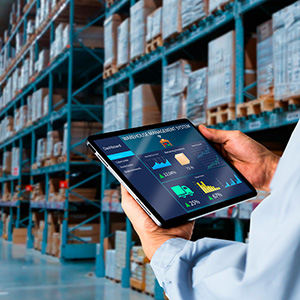
Forecasting can also help you manage your inventory better. When demand rises, you need lots of product on the shelves and a marketing system ready to support those sales. But without accurate forecasting, you won’t see those surges in demand coming — which means your inventory will always be playing catch up.
On the other hand, overstocking is just as problematic. If you anticipate demand that doesn’t materialize, you’ve wasted limited capital on unnecessary inventory. That’s money that could have been spent on products with higher demand or used elsewhere to improve your business. Plus, you now have the added expense and trouble of storing the overstock.

Risk #3: Missed Sales Opportunities
Speaking of under- or overstocking, you can’t sell what you don’t have. If inaccurate forecasting left you short on inventory, you could miss out on potential sales. And by the time you’ve increased production and gotten more product out the door, those potential customers might have gone elsewhere, perhaps permanently.
Risk #4: Strategic Planning Failures
Gut instincts alone guarantee the success and growth of your business. Forecasting gives you data-driven insights, so you can make solid, informed decisions about market expansion, product development, capital investment, and other elements of your business. Without the right data, you’re at greater risk of misguided strategies, wasted resources, and missed opportunities for growth.

Risk #5: Profit and Loss and Balance Sheet Issues
Lack of planning can also impact your working capital. That can mean you risk running out of cash to operate. If the market is managing you, you can’t manage your balance sheet or your profit margin.
Traditional Approaches to Forecasting

Reliable forecasting is built on a foundation of accurate data and smart methodologies. You can’t make solid decisions based on false information or unsound practices.
Forecasting generally relies on two main types of data:
Challenges with Traditional Forecasting
Traditional forecasting methods are useful, but they typically rely on historical data and basic statistical techniques, which can lead to several issues:


Navigating Black Swans in Forecasting
There are some disruptive forces that no one can predict … and that can change everything. These events are commonly called “black swans.”
Black swans can disrupt markets, supply chains, and overall business operations. A recent example is the Covid-19 pandemic and its effect on the worldwide economy. For manufacturers, these black swan events can lead to sudden shifts in demand, interruptions in the supply chain, and an overall transformation of market dynamics.
While you can’t predict black swans, you can prepare for them. For example, prior to the recent pandemic, no one knew about Covid-19 or how it would impact manufacturing a few years later, but government entities warned for years that a pandemic was imminent.
The lesson? Prepare for the unknown.
We recently spoke with Brendan Breen, CEO of the Industrial Supply Association (ISA), who said the best way to future-proof yourself against black swans is to act as if you know a black swan is coming. Robust forecasting can make that easier. If you can predict what’s a few miles down the road, you can plan for it, securing your sales enough now for when that black swan eventually appears.
“The best thing you can do is perform as well as you possibly can in normal times so that when the black swan comes, it doesn’t hit you as hard.”
– Brendan Breen, CEO, ISA
New Forecasting Tools for Manufacturers
The good news about forecasting is it’s getting easier. Today, advancements in technology have spawned new tools that make forecasting simple instead of overwhelming.
By incorporating elements of artificial intelligence, machine learning, and advanced data integration, these new forecasting tools have made it possible for smaller companies to get accurate, up-to-date forecasting with the touch of a button.

Example: Top Line Pulse
One of the best forecasting tools available to manufacturers today is Top Line Pulse. Developed by the ISA, it lets you load your data and match it against an industry index so you can see how your sales correlate to the index.
It also shows you the business cycle the industry is currently in, so you can see what’s likely to come next. This lets you leverage industry forecasts to “predict the future” of your company’s own demand and sales. With that information, you can adjust your production and sales strategies and inform your customers about what’s coming in the short, middle, and long term, so they can in turn adjust their purchasing decisions.
During a recent ISA panel discussion, several manufacturers discussed what they perceived to be key benefits of using Top Line Pulse for forecasting, including:
Enhanced visibility into future demand:
Top Line Pulse allows manufacturers to anticipate market changes and adjust their strategies accordingly, so they can stay ahead of the competition.
Holistic view of market dynamics:
Top Line Pulse combines various data sources, including sales figures, economic indicators, and industry trends, to offer an integrated, comprehensive perspective into these complex factors.
Accessible expertise:
The tool boasts an extremely user-friendly interface that simplifies the forecasting process, ensuring that anyone who needs to use the tool is easily able to do so.
We think every ISA manufacturer should be using this program. Here’s a look at how we use it.
How Durrie Sales Uses Top Line Pulse to Help Our Principals
At Durrie Sales, we use Top Line Pulse to improve our forecasting and strategic planning processes so we can be a valuable partner for our manufacturing clients. By providing smarter forecasts, we can help them:

Important tip: Involve your IMR in your forecasting! They can help you assess and refine your growth goals. And if they’re using a forecasting tool, they can help ensure your goals match up with what’s predicted to happen in the market.
“This is a great way to sit down with a principal and a rep to say ‘What are we going to do this year? What are our expectations? What should you be making?’ This helps us all get on the same page and agree on those key sales goals.”
– Patrick McKeever, President, Durrie Sales
Partnering with an IMR for Improved Sales and Forecasting
In this guide, we’ve shown you how important forecasting is for your business. Without it, you risk margin squeeze, lost sales, and business decisions built on limited information.
You’ve seen why forecasting can be challenging to get right and how technological advancements and the right partnerships can make it easier than ever to get a reliable picture of what might be just around the corner for your business.
You’ve also seen how accurate forecasting can help you perform well during periods of “business as usual,” giving you an extra financial cushion to safeguard your bottom line for when the unexpected happens.
There’s just one thing left to ask:
Are you ready to see how your IMR can help you sales forecast, so you can better manage your inventory, plan your production, and capture as much revenue as possible?

 Fill out the form and we’ll send you a downloadable PDF to reference anytime.